Scientific Instruments: Real science you can hear. four instruments that turn DNA, orbits, harmonics and particles into sound, all tuned from real data and able to lock to a shared tempo with Grid Sync.
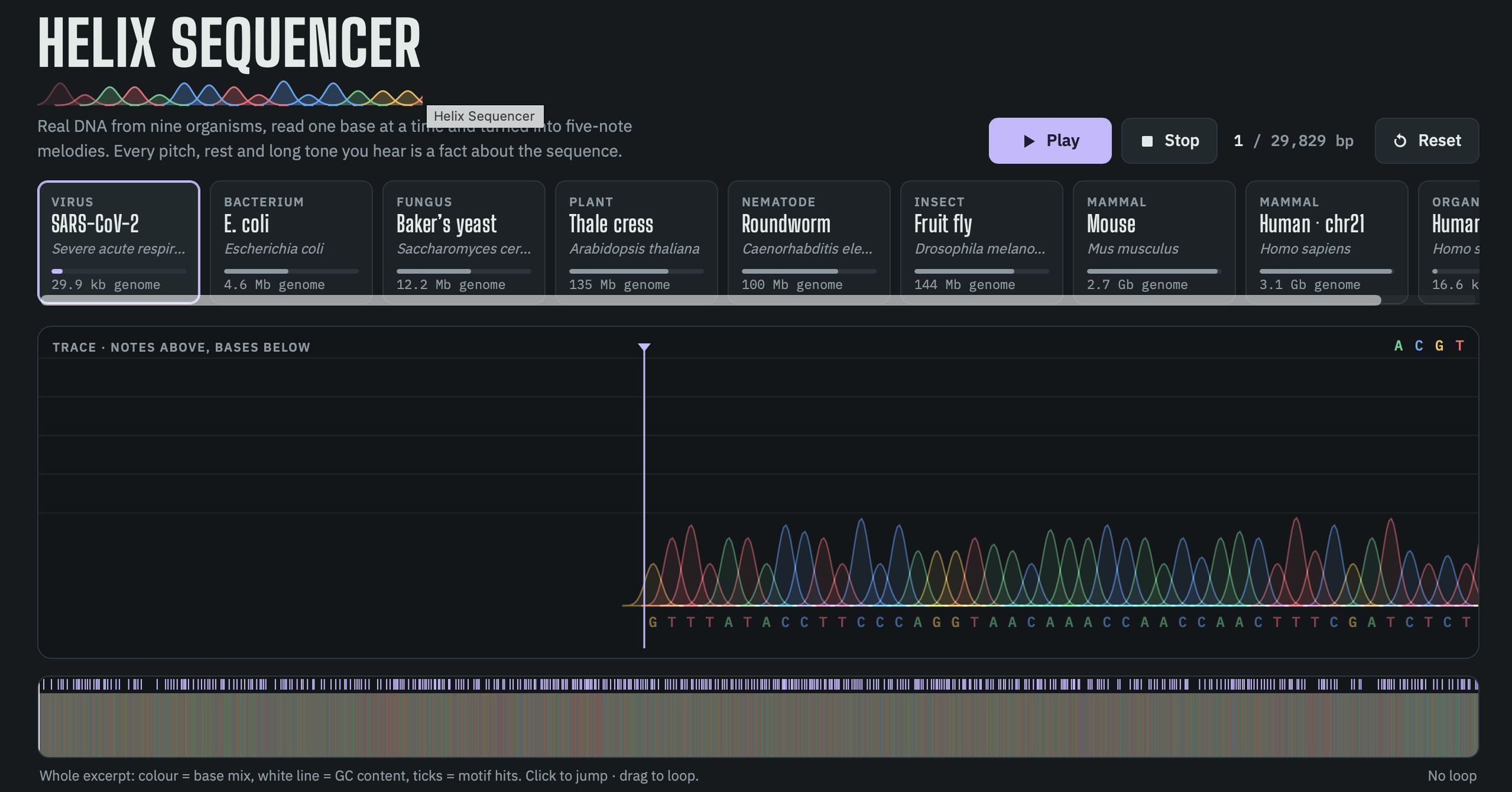
Listen to the genome. Real DNA from nine organisms, read one base at a time and played as melody. Choose how the sequence becomes music: single bases, base pairs across three octaves, or a “DNA walk” where G and C climb and A and T fall. Every note, rest and held tone comes from the sequence itself. You can loop a stretch, follow GC content and motifs on the overview strip, and see how long the whole genome would take to play.
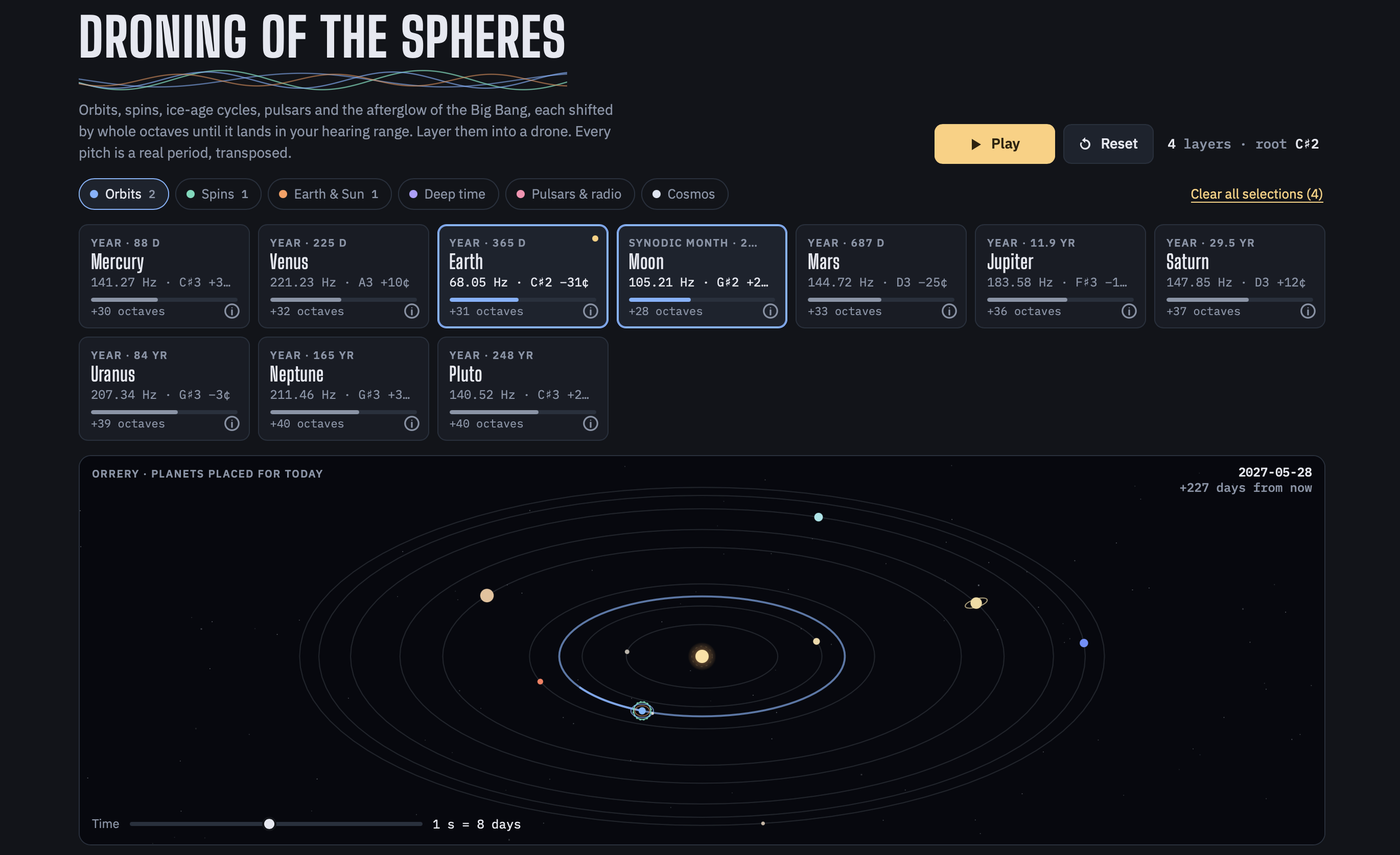
The solar system, tuned to your ears. Planetary orbits, spins, ice-age cycles, pulsars and the afterglow of the Big Bang, each raised by whole octaves until you can hear it. The Earth’s day sounds at 194.18 Hz and the year at 136.10 Hz. Stack them into a drone while a live orrery turns, then add the pulse deck for rhythm. Every pitch is a real cosmic period, transposed.
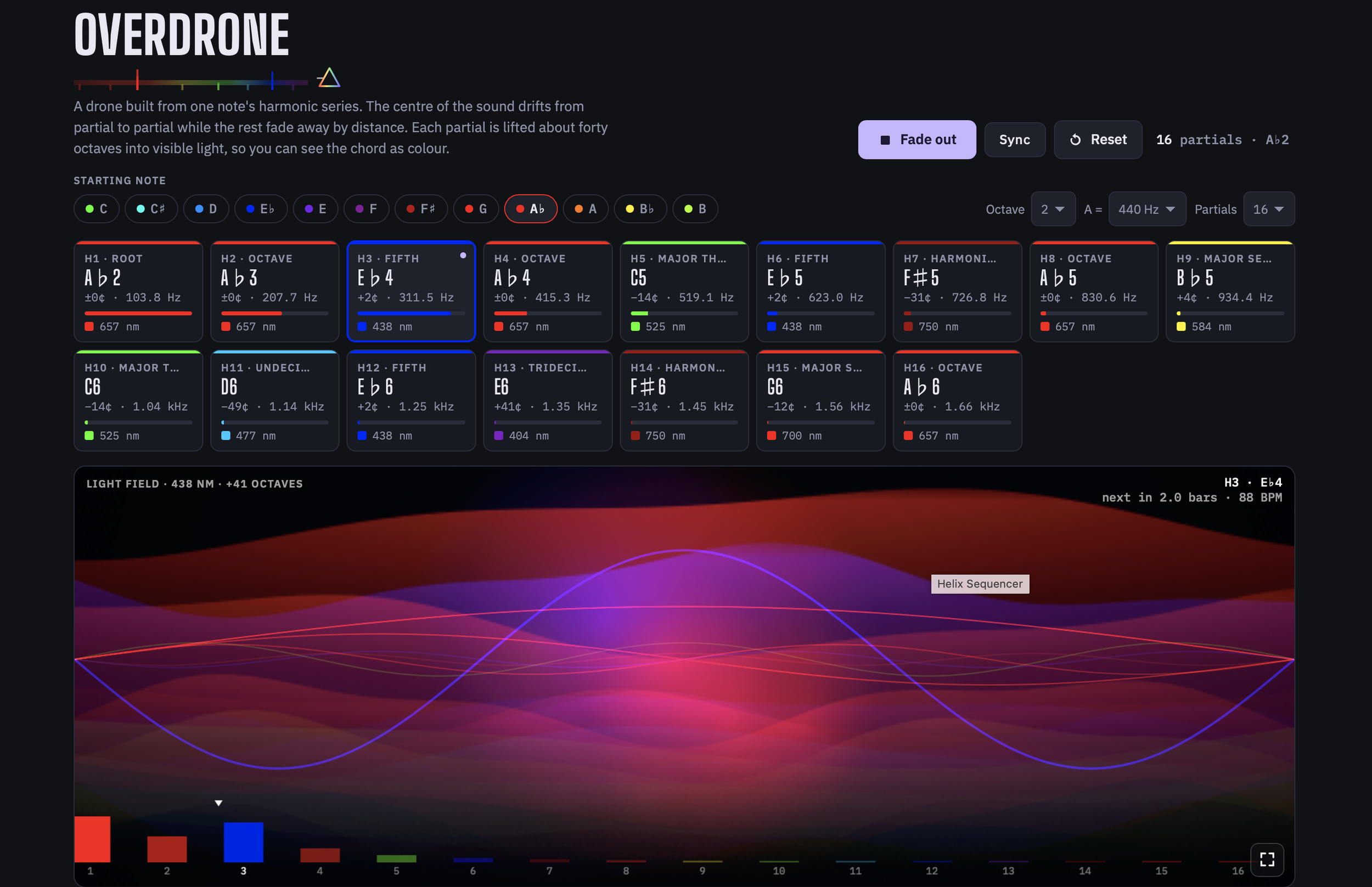
One note, seen as light. A drone built from the harmonic series of a single root. The centre of the sound drifts from partial to partial, and the others fade the farther away they are. Each partial is raised about forty octaves into visible light, so you can see the chord as colour. Readouts show how far each pure harmonic sits from piano tuning: the 7th is about 31 cents flat. Tap the prism to open the drum machine.
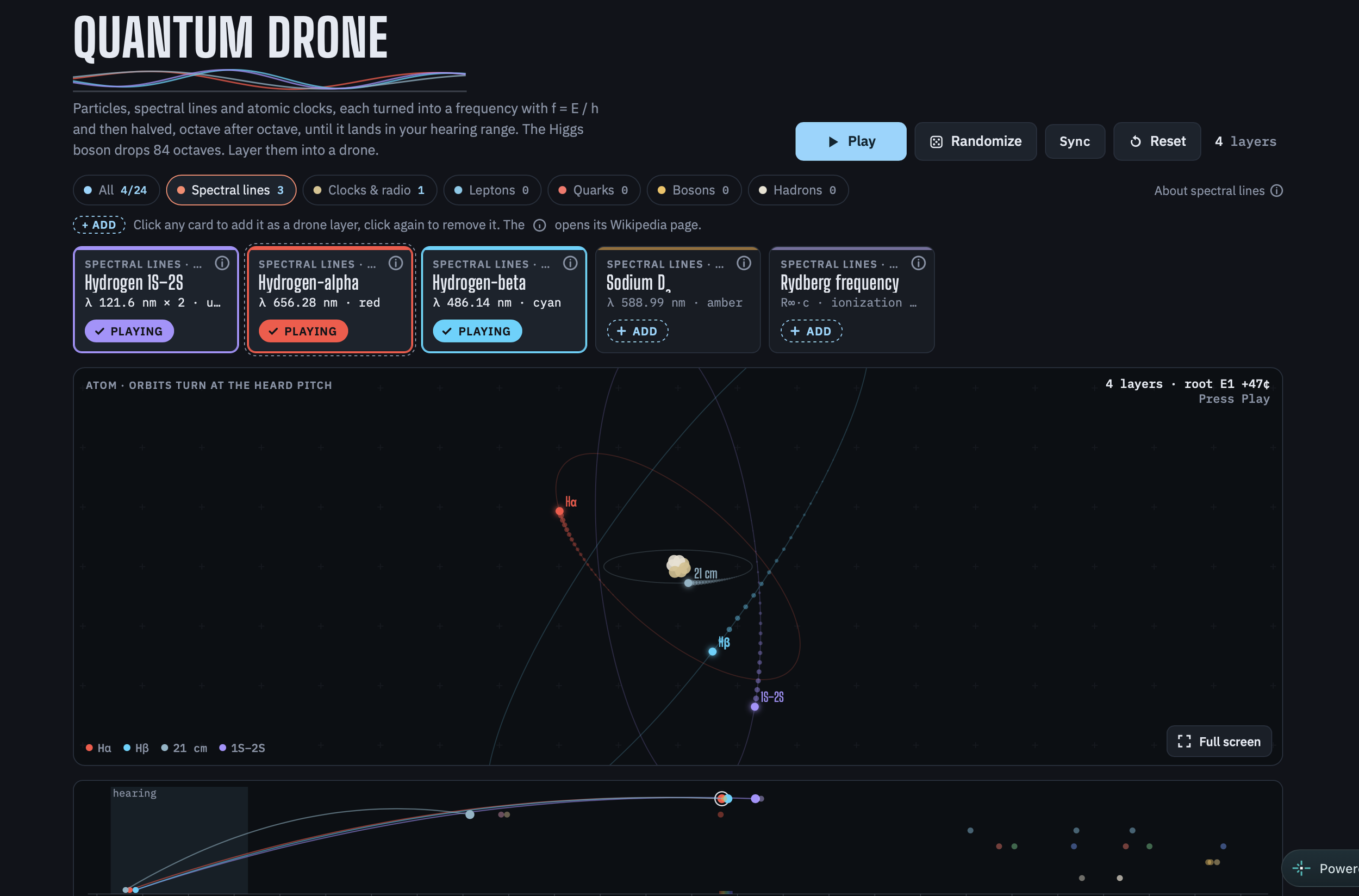
The Higgs boson, 84 octaves down. Particles, spectral lines and atomic clocks, each converted to a frequency with f = E/h and halved, octave by octave, until it reaches your hearing. Layer an electron, a hydrogen line and a caesium clock into one drone, and watch the atom and energy ladder respond.